 By Meadowlily Farm
- 1,420
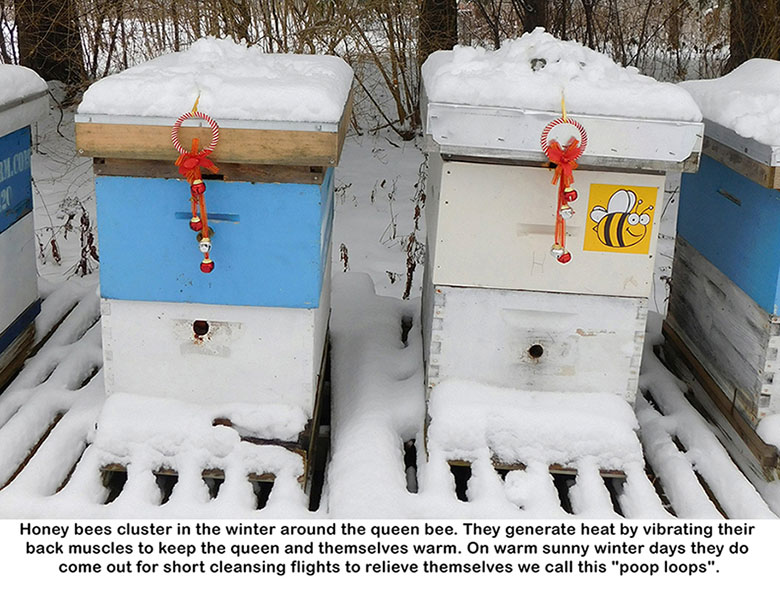
Honey bees do not hibernate in winter. Bees survive the winter by forming a dense cluster inside the hive and generating heat through muscle vibrations.
❄️ Inside the Winter Hive
- The Cluster: The bees cling together in a dense ball with the queen bee in the center. This collective effort is what keeps them warm.
- Heat Generation: The bees inside the cluster are constantly vibrating their flight muscles (like shivering) to generate heat. This is an energy-intensive process.
- Temperature Zones:
- Core: Maintained at a warm temperature, often between 32-35°C (90-95°F).
- Outer Mantel: This is the insulating layer of bees, packed tightly together with their heads facing inward. They interlace their tiny, feather-like hairs to trap the heat. The temperature here is much cooler, around 8-12°C (46-54°F).
- Food Stores: The frames surrounding the cluster are where the bees have stored their honey. Since generating heat requires constant energy, the cluster slowly moves across the frames throughout the winter to access and consume these stored honey reserves.
- The Queen: She is safe and warm in the center of the cluster. The colony works to keep her and any early brood (larvae – baby bees) protected.
- The Colony: Produces special “winter bees” with a longer lifespan to care for the queen. The “winter bees” can live 4 to 6 months. Their main job isn’t foraging but cluster maintenance, meaning less energy expenditure and less wear and tear. The “summer bees” live only 6 to 8 weeks due to constant foraging and hive duties.
- Drones: Male drones are typically evicted from the hive by the workers in the late fall because they don’t contribute to the colony’s winter survival efforts and would be an unnecessary drain on the precious food stores.
The beehive in winter is a tightly organized, living furnace that shifts position to eat its way through the stored honey until spring arrives. Bees produce far more honey than they need, creating a surplus that allows beekeepers to harvest honey while still leaving ample stores (often 80-90 lbs or more) for the colony to survive the winter and thrive until spring. On sunny days in the winter the bees will come out to defecate. We call this “poop loops.”